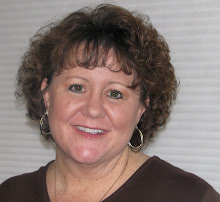
Barb Hecker always knew she was loved. Adopted at birth, she was blessed with a wonderful family and a happy childhood.
“My brother and I were thrilled to know that we were twice loved,” said Hecker, of Sandpoint. “Our birth mothers loved us enough to make sure we had a good home, and our adoptive parents carried on from there.”
But when Hecker had her own children, she felt something missing.
“I got tired of going to the doctor’s office, filling out forms and always putting ‘unknown’ on health history,” said Hecker.
It prompted her to begin the search for her birth parents 12 years ago. She contacted the agency that handled her adoption and within two weeks she had the information needed to locate her birth mother.
Unfortunately, she had died. But Barb learned she had two half-brothers.
She traveled to Texas to meet them and at the advice of the agency, did so alone.
“They said I did not want to have to worry about my husband and kids because I would be busy processing my own emotions,” said Hecker. It was advice for which she is grateful.
And if her half-brothers had any doubt Hecker was their sister, it vanished the minute they saw her.
“My brothers took one look at me and they knew,” said Hecker, who is told she shares many traits with her birth mother. “They said it was like seeing a ghost.”
After returning to Sandpoint, Hecker shared her story with her friend Laurie Anderson, of Sagle.
Like Hecker, Anderson was adopted. Born in the Seattle area, she grew up in Ellensburg.
“Every time we went to Seattle, I would always look around and wonder,” Anderson said of her curiosity about her birth parents.
But she was not sure about whether she wanted to begin the search.
“I felt it may be hurtful to my parents,” Anderson said of her adoptive parents. But because she had four children of her own, she, too, wanted to know about her ethnic background as well as any potential health issues. So with Hecker’s help she began the process.
“If it weren’t for Barb, I would not have done it,” Anderson said.
Working with the Washington Adoptive Rights Movement, it took three years for Anderson to locate her birth mother.
“They said it was the least amount of information they ever had to go on,” Anderson said.
Initially, her birth mother was not sure she wanted to meet. But after Laurie's birth mother notified Laurie's birth father, the couple agreed to meet their daughter they gave up decades before.
Anderson asked Hecker to accompany her to the meeting.
“I wanted to take Barb because if it weren’t for her I would not have done this,” Anderson said. “And because she did not get the chance to meet her birth mother I wanted her to be a part of it.”
Together the friends flew to Seattle to meet Anderson’s birth parents who had flown from Oklahoma City and Colorado.
They had dinner at the Space Needle and talked at length, asking questions and fulfilling one another’s curiosity.
Anderson’s birth mother, still unsure of the meeting, looked to Hecker for advice on how to handle this newfound relationship. She said she had never had other children and did not think she could be a mom.
“I told her, ‘Laurie does not want a mother. She wants a friend,’ ” Hecker said. “She said, ‘I can do that.’ ”
She also shared with Hecker that when she found out she was pregnant, Anderson’s birth father flew back from overseas, brought her a string of pearls and proposed to her. But she declined, saying she was not ready.
Anderson’s birth mother had kept the string of pearls and brought them with her when she met Anderson.
“She asked me what I thought about her and Laurie’s birth father presenting Laurie with the pearls,” Hecker said. “I told her I was sure she would love it.”
Hecker was right. It is a gift Anderson treasures.
As both women discovered more about their biological beginnings, their closure began and their friendship grew. “There’s definitely a bond,” Anderson said.
“A deep-down bond,” Hecker said, adding that it was healing for her to share the journey with Anderson. “It is a very intimate experience.”
Both Anderson and Hecker advise that searching for one’s birth parents may not be for everyone. But if one does undertake the search, Hecker said people need to be sure they are doing it for the right reasons, such as discovering medical history, or just to know the story behind why they were given up for adoption. It can help to give closure.
“It is definitely a journey, but it is one worth taking,” Anderson said.
Hecker agrees.
“You can’t have peace until you find the pieces,” she said.
Sunday, May 16, 2010

Sunday, May 2, 2010
Sue Vogelsinger Recalls Her Years in the White House and Washington, D.C.
Sue Vogelsinger first learned of her boss’s death while reviewing one of his upcoming speeches. The place was Dallas. The date was Nov. 22, 1963. Her boss was President John F. Kennedy.
“My colleague, Chris Camp, and I were working on speech copy for the next stop. We were on Air Force One in (Kennedy’s) cabin when one of the stewards came through and said to pack up,” said Vogelsinger, a Sagle, Idaho, resident who served as a member of Kennedy’s press staff.
Decades later Vogelsinger smiles as she remembers the man she calls physically awe-inspiring, quick-witted and a man who truly loved his job.
“Being around President Kennedy was exhilarating,” said Vogelsinger.
After graduating from Penn State, Vogelsinger’s goal was to earn money so she could move to California.
She first worked for a Florida senator until November 1958, when she was hired by the Kennedy campaign to work with press secretary Pierre Salinger.
“I chose to work for Salinger on the theory that working with him would involve travel,” said Vogelsinger. And she was right.
After a successful campaign, Vogelsinger worked on the transition team.
“My final duty the night before the inauguration was to take a copy of President Kennedy’s inaugural address to President (Harry) Truman,” said Vogelsinger. “Much to my surprise I was able to go right up to his (hotel) room and knock on the door.”
Truman opened the door in his bedroom slippers and invited her in to meet Bess. Later that night, Vogelsinger was hospitalized for exhaustion and missed the inauguration and the ball.
During Kennedy’s administration Vogelsinger traveled extensively with the president and was in Ireland with him for the Kennedys’ emotional return to the home of their ancestors.
With a press staff of only eight, the days were long and draining – especially during the Cuban Missile Crisis and other such times.
“But you really did not care because it was so exciting and so exhilarating,” said Vogelsinger.
After Kennedy’s assassination, President Lyndon Johnson chose to keep Kennedy’s staff. Vogelsinger said many felt they could not do a good job for Johnson – their hearts weren’t in it. She left the White House in April 1964 to assist Salinger in his campaign to be a senator from California.
Married by this time to Bruce – who happens to be a Republican – she returned to Washington, D.C., and became pregnant with twin girls, Sera and Julia.
But a love for the Kennedys and politics led Vogelsinger back into part-time work for Robert Kennedy, opening and answering his personal mail. Vogelsinger was at home in Virginia when she received the call that Robert Kennedy had been killed.
“I worked on helping get that funeral together, too,” said Vogelsinger.
Over the years, Vogelsinger worked with several other political figures, including George and Eleanor McGovern, Ted Kennedy, Jimmy Carter and Hillary Clinton.
During Ted Kennedy’s 1980 campaign Vogelsinger was in charge of scheduling for the Kennedy wives, sisters and 29 grandkids.
“Teddy used to call me the saint,” said Vogelsinger.
She worked on President Jimmy Carter’s inaugural committee, and in 1986 she and a friend opened a media relations firm. Vogelsinger was pulled back in to the political scene by the desire to work closely with White House staff when President Bill Clinton was elected. She volunteered her time and worked closely with the first lady.
One of her favorite projects was her involvement with the promotion of Hillary Clinton’s first book, “It Takes a Village,” as a liaison between the White House and the book’s publisher.
Vogelsinger has admiration for Hillary Clinton; even through all the scandals of Monica Lewinski and the Whitewater investigations, Hillary Clinton amazed her, she said.
“She kept in amazingly good spirits,” said Vogelsinger.
Of all her years working with so many administrations, Vogelsinger said the biggest public misconception was that of Hillary Clinton.
Vogelsinger adds that her observations of both Clintons were of a couple very devoted to one another. “They were very warm and affectionate with each other. You could certainly tell they cared deeply about each other.”
Vogelsinger and her husband’s desire to be close to their daughters, who live in Sandpoint, precipitated a move from Washington, D.C.
“Politics has gotten so mean and vicious that I do not miss what it would be like today,” said Vogelsinger. “But I do miss what it was.”
The couple spent New Year’s Eve 1999 at the White House and shortly thereafter moved to Idaho.
“It was a good way to end my political career,” she said.
In four decades in Washington, D.C., Vogelsinger said one experience always took her breath away.
“I had to pinch myself each time I took off in the helicopter from the White House lawn sitting with the president of the United States,” she said.
Sunday, April 25, 2010
This Week in Sandpoint....Career Fair & Opening of the Sandpoint Farmers Market
It’s the first sign of summer in Sandpoint. Vendors line the perimeter of downtown’s Farmin Park and spill into neighboring Jeff Jones Town Square. The Farmers Market at Sandpoint, a nonprofit organization managed by its members, takes place Saturday mornings and Wednesday afternoons.
As this 22-year-old Sandpoint tradition opens Saturday, it is making changes to adapt to the struggling economy. According to Emily Levine, vendor and market board member, this year food stamps will be accepted.
“The Moscow Farmers Market spearheaded the system for Idaho,” said Levine who last year attended a farmers market management conference. “It (accepting food stamps) is a natural progression for the farmers market. It will allow low-income people to be able to use the market.”
The same guidelines that apply to the use of food stamps in grocery stores will apply at the market.
The only exception, said Levine, is that people will be able to purchase plant starts for food items with their food stamps.
“The plant starts is a real cool thing so people who want to can have their own garden,” she said.
Each vendor who accepts food stamps will go through training. When customers arrive at the market they will go to the market manager who will issue food market script which can be used throughout the entire market season.
Sandpoint’s market has grown each year. “In our busy season we will have at least 80 to 85 vendors at market on a given Saturday, and approximately 30 vendors at our Wednesday markets,” said market manager RaeAnn Mavity. She said the Saturday market has a farm/food section as well as fine arts and crafts. There’s also live music.
Career Fair Wednesday
If you are among the many who are struggling to find employment, you may want to visit Sandpoint on Wednesday for the Fifth Annual Career Fair hosted by the Idaho Department of Labor and the Greater Sandpoint Chamber of Commerce from noon to 6 p.m. at the Bonner Mall.
The fair, sponsored by Litehouse, Inc., will host employers who will accept applications and some who even intend to conduct on-site interviews.
“One of the most challenging obstacles in obtaining a job is getting your foot in the door, and the Career Fair allows job seekers opportune face-to-face interaction with employers,” said Amy Little, president and CEO of Sandpoint’s Chamber of Commerce.
While some people may be searching for full-time work and others just need a part-time position, organizers say there will be something for everyone. The employers include those looking to hire in a variety of industries including health care, manufacturing, education and management.
“The (available) jobs are changing daily as new positions open and existing ones are filled,” said Bridgette Bradshaw-Fleer of the Idaho Department of Labor. Organizers say there are tasks job seekers can do prior to attending the event that will help to create a positive impression on the employers present.
The Sandpoint Chamber of Commerce has a list of employers who are attending the fair listed on its website, www.sandpointchamber.org (http://www.sandpointchamber.org) . Job seekers can research the employers and prepare and present résumés tailored to the appropriate position for which they are applying.
Preparing a short introduction and dressing appropriately can go a long way to creating a lasting impression.
Additionally, Ruth Wimberley of Human Resource Consulting and Amber Snoddy of Business Management Services will be available at the fair to support and counsel job seekers, offering suggestions on résumés and answering questions.
Idaho Meth Project Launches Paint the State Contest
Everyone has seen the billboards. One look and eyes quickly turn back to the road. They portray people whose appearances have deteriorated to the point of rotting teeth and discolored skin.
That is exactly what the Idaho Meth Project has hoped to accomplish since launching its campaign two years ago. A nonprofit organization, the Idaho Meth Project is a prevention program whose goal is to prevent first-time meth use.
Sarah Ingram of the National Meth Project, based in Los Angeles, said that the program is now in eight states, with Idaho being the third state to implement it two years ago. Other states include Montana, Arizona, Colorado, Wyoming, Hawaii, Georgia and the southern portion of Illinois.
Founded by California resident Thomas Siebel, the project came about as a result of Siebel’s exposure to the meth problem while spending a portion of each year in Montana.
“Montana was fifth in the nation per capita in meth use,” said Ingram, who adds that Siebel came up with the idea of creating a public education campaign based on the premise of consumer marketing.
“Instead of selling a product he wanted to unsell a product,” said Ingram. The goal was to target kids who are at risk of trying any type of controlled substance and educating them about the dangers of methamphetamine use before they ever have a chance to experiment with the dangerous drug.
According to Ingram and information released by her office on Monday, the results have been significant.
“We have had great results in Montana. Since the time the project started, teen meth use (in Montana) is down 62 percent,” she said. The results are from a survey put out by the Centers for Disease Control and Prevention and administered in all 50 states. Since introducing the Idaho Meth Project, statistics show that meth use among teens in Idaho has decreased 52 percent in just two years.
According to statistics provided by the Idaho Meth Project, the state spends $66 million dollars annually to incarcerate users of methamphetamine.
To help further their cause of preventing the use of meth, the Idaho Meth Project on Monday launched a new campaign aimed at sending an anti-meth message through each of Idaho’s 44 counties. The Paint the State contest will involve 13- to 18-year-olds who will produce artwork – of any style and any medium – with a clear anti-meth message. The contest was first done in Montana in 2006.
“In Montana they (the contest participants) painted everything from barns to walls to cows,” said Ingram, who added that Montana’s contest generated more than 660 images.
As part of its goal to spread the message, the contest guidelines state that the artwork must be visible from public places – whether it is a highway, a field or city streets. With permission from the owner – and in some cases the city in which the artwork is displayed – the artwork can be on display for an undetermined amount of time. However, the contest guidelines require that it must be on display during the week of July 12-18 in order to be eligible for prize money.
Funded primarily through private donations, the Idaho Meth Project is awarding a total of $3,000 in prizes for each county. The first-place winner in each county will receive $1,500 with second and third receiving $1,000 and $500, respectively. First-place winners from each county will compete for the state prize of $5,000. Idaho artist Charles Gill and a statewide panel will judge the competition.
Paint the State program coordinator Elli Brown has traversed the state. Some of the suggestions she brings to organizers include having a local artist assist teens with their vision and encouraging those who may not be able to afford supplies to contact local businesses to help sponsor their project.
Ingram said that Paint the State is a wonderful way for kids to learn more about the dangers of meth use.
“It’s a great way to get the message to the community at a grass roots level,” she said. “And teens talking to other teens is a powerful way to communicate.”
For more information log onto www.paintthestateidaho.org
Sunday, April 18, 2010
Sandpoint's Earth Day Celebration April 22nd at the Events Center

Making a difference. That is the focus of Sandpoint’s Earth Day celebration this week. While communities worldwide celebrate Earth Day’s 40th anniversary, the Idaho Conservation League and Lake Pend Oreille Waterkeeper will host Sandpoint’s third annual celebration.
The free event will bring together more than 20 organizations who share a common goal – to educate people on how they can make a positive difference and protect the Earth not only today but for generations to come.
Organizers have planned activities and displays for everyone from preschool to retired members of the community. Children’s activities include crafts, a movie and a scavenger hunt. Representatives from the Idaho Fish and Game Department’s Watchable Wildlife education program will also be on hand to give children a chance to see live owls.
Other activities include a free tree sapling giveaway, a book signing by Jane Fritz, author of “Legendary Lake Pend Oreille,” and demonstrations on how to make nontoxic home cleaners.
One of the main attractions of the evening will be the participation of chefs from several area restaurants who will prepare full dinners using locally grown ingredients.
This is the third year that Emily Levine and Sarah Rusnak have worked with the local Earth Day event, helping to bring awareness to the fresh produce available throughout the year in Sandpoint and the surrounding communities.
In years past, Levine and Rusnak have contacted local farmers, picked up donated food and cooked for the event themselves. But this year Levine said will be a bit different.
“We are involving local restaurants who will each prepare one dish,” said Levine. To support those participating restaurants, Six Rivers Market, a Web-based food cooperative that markets locally grown products, will give each restaurant a one-month free membership.
“I think Six Rivers Market is a really amazing organization and resource for local food,” said Levine. “It bridges the gap between producers and consumers.”
Mimi Feuling and Rob Fredericks of Cascade Creek Farm in Bonners Ferry have been involved with Sandpoint’s Earth Day event since the beginning. Over the last two years they have supplied most of the meat, wheat and some of the eggs used by Levine and Rusnak.
Feuling also sits on the board of directors for Six Rivers Market and is excited about what the cooperative has done for the community and that it is able to assist in this year’s celebration.
“Six Rivers producers have a pretty good selection of items, even though the weather is pretty iffy,” said Feuling, who adds that there is grass-fed beef, pastured pork, natural lamb, yak, and bison for meat choices. “We have local farmers’ cheese, cheddar cheese, goat chevre, raw goat milk feta and eggs. There are greens – lettuce, spring mix, spinach, fresh rosemary and nasturtium.”
But the products available are not limited to meat, vegetables and dairy. There are also honey, salad dressing, barbecue sauce, jam and syrup.
Levine, who owns local farm Red Wheelbarrow Produce, said she first became involved with promoting local food when she lived in Minnesota. There, someone invited her to participate in a local food challenge where they ate only food that was grown within 200 miles of her community. When she moved to Sandpoint about four years ago, she saw a need for more produce in the area and believed there was a demand that would support more local farms. It was then she decided to start her own and is pleased with the support the local restaurants have shown.
“We have a lot of restaurants and cooks that are very supportive of using local foods and who have been shopping at the farmers market,” said Levine.
Feuling agrees that purchasing locally grown and produced food will benefit everyone and it is that message she hopes to convey at the Earth Day event.
“Buying local gets the consumer fresh, healthy, nutrient-rich food,” she said. “It supports the local economy and builds the fabric of our communities.”
Levine said she hopes the Earth Day event will help bring awareness to what produce is available in the community year round.
“Hopefully it will have a snowball effect, with people starting to demand more local food; the quality will only increase as more producers will in turn increase their production for the off-season,” said Levine.
Information:
When: Thursday, 4 to 8 p.m.
Where: Sandpoint Events Center, on the corner of Pine Street and Euclid Avenue.
Information: www.greensandpoint.com (http://www.greensandpoint.com)
Cost: Free
Participating restaurants: Café Bodega, Spuds, Pine Street Bakery, Eichardt’s Pub, Common Knowledge and DiLunas
Sunday, April 11, 2010
Kinderhaven Launches Blue Ribbon Campaign in Recognition of Child Abuse Prevention Month

They are heartbreaking stories. Tales of lost innocence. Abuse, neglect and violence at the hands of one in whom children place all their trust – their parents, caregivers or a close family friend. And it is that loss of trust that can significantly impact a child’s development. Because the stories are so upsetting, they have remained untold. Until now.
April is Child Abuse Prevention Month. Staff and the board of directors for Sandpoint’s Kinderhaven – a privately funded nonprofit home for abused and neglected children that serves the five northern counties in Idaho – are taking the opportunity to let people know that these stories are happening in this area. The goal is to not only educate the community on signs of abuse but to give the children a voice.
Kim Diercks, president of Kinderhaven’s Board of Directors, tells of a 12-year-old who walked his younger sibling five miles to Bonner General Hospital’s emergency room to be treated for a severe allergic reaction. The family was living in a van in a store parking lot and the parents were away all day drinking. And this was not an isolated event. Sometimes the parents would disappear for two to three days leaving the 12-year-old to care for his many siblings.
Former board president Marsha Ogilvie has countless stories that come to mind about other past or present Kinderhaven residents.
“There was an 8-year-old little girl who was drugged by her mother’s boyfriend, sexually abused while being filmed along with a neighbor boy,” said Ogilvie. “The pornographic images were then published on the Internet.”
And then there was the story of an 18-month-old boy who had been deprived of milk because his father felt he was too old for a bottle. His father burned the boy’s scrotum and finger tips with a lighter.
Longtime board member Barb Merritt recalls one occasion when a small child crawled to her, lifting his arms, begging to be held. She bent down to pick him up and was quickly stopped by the Kinderhaven staff.
“You must scoop him up from his bottom,” she was told. She lifted the young child’s shirt only to discover bruises covering his midsection. Picking him up as one normally would a small child would have meant excruciating pain for him.
One day Merritt took one of the young residents on a bike ride – offering some special one-on-one time with a trusted adult. The two stopped for lunch along the way.
“He ordered everything on the children’s menu,” said Merritt. “He said he wanted to eat one meal and bring back all the rest to share with his siblings (who were also at Kinderhaven). This child loves to share everything.” She tearfully adds that this same boy told staff members that his mom had tried to kill him.
In an effort to raise awareness, Kinderhaven officials have launched a blue ribbon campaign – originally started by a grandmother who lost a grandchild to abuse – with the blue representing the bruises that cover an abused child’s body.
“Our primary goal is to increase awareness of child abuse – its prevalence and symptoms – as a first step in helping prevent it,” said Kinderhaven’s executive director Phyllis Horvath. “For social change to occur we must first have awareness of the issue.”
Drive through Sandpoint during April and you will see blue ribbons on several trees in the area as well as several hundred Sandpoint residents sporting blue wristbands with Kinderhaven inscribed on them.
“We sold out of the wristbands within the first couple of days,” said Diercks, adding that the initial order of 1,000 had to be reordered to meet the high demand.
In April, Kinderhaven representatives will visit Chamber of Commerce meetings and Rotary organizations, throughout the five northern counties, educating groups on Kinderhaven’s role in their communities.
Unfortunately, the high cost of running a facility that must be staffed 24 hours a day 365 days a year has left Kinderhaven nearly $70,000 short of its budget this year. The goal is to not only raise awareness but they are hopeful that even in these tough economic times people can dig a little deeper and contribute what they can to help protect the most vulnerable members of the communities.
“Whether it is a child donating a week’s allowance or a company choosing Kinderhaven to be the beneficiary of its giving, every bit helps,” said Horvath. “In 14 years we have not turned a child away due to lack of funds and we don’t want this to be the year we have to do that. We must do what we can to protect all children. Every child deserves a chance in life.”
How to help
To make a tax-deductible donation to Kinderhaven, go online to www.kinderhavensandpoint.com or mail your donation to Kinderhaven, P.O. Box 2097, Sandpoint, ID 83864.
If you suspect child abuse, call the local Health and Welfare Child Protective Services. There is a hot line for confidential reporting. If you witness an incident of abuse or if you fear that a child is in immediate danger, call 911.
More information
From 2000 through 2009, 2,657 children have entered the foster care system in Idaho’s five northern counties. Statewide during those same years there were 13,377 children who entered foster care.
Sandpoint-based Kinderhaven has sheltered 1,300 kids since opening in 1996.
Kinderhaven partners with Court Appointed Special Advocates and the Idaho Department of Health and Welfare. Each child is appointed a CASA worker who is specifically there to represent the child’s interest. Health and Welfare, by law, must take into consideration the interest of the child and the rights of parents.
When a child is in the foster care system and experiences one change in living arrangements, that child has a 60 percent chance of successfully moving through the system and into adult years. If the child experiences two changes, the chances of success drop to 15 percent; with three changes, it drops to 5 percent
Sandpoint Is a Finalist for America's Coolest Small Town

It is referred to by many here as the “aha!” moment – the time when they cross the long bridge into Sandpoint, take in the view and realize that they have found their new home. The beauty of Lake Pend Oreille surrounded by the mountains is what initially lures many to this resort town. But it doesn’t take long after arriving for people to realize there is much more to this community than its breathtaking views.
The uniqueness of Sandpoint is one reason it is among the finalists for Budget Travel Magazine’s America’s Coolest Small Town’s contest. Of the 147 nominations received, Sandpoint has made the cut to the top 21 towns and currently sits in 10th place. Other communities in the running include Red Lodge, Mont.; the Oregon towns of Sisters and Bandon; Sitka, Alaska; Brevard, N.C.; Cooperstown, N.Y.; Egg Harbor, Wis.; and the current leader, Ely, Minn. The voting will end May 9.
“Being nominated for this award is a privilege for us. We are thrilled so many new people will discover how special our community is and hopefully plan a visit,” said Amy Little, president and CEO of the Greater Sandpoint Chamber of Commerce. “Winning would be an amazing honor for us.”
For Dan and Ruth Wimberly, it was a visit to friends that made them realize that they too wanted to make Sandpoint their home.
After living in Sacramento for 20 years, the couple knew they wanted to leave California as they neared retirement. They had visited Dan’s high school friend Pete Merritt and his wife Barb in Sandpoint several times and grew to love the area.
“It was important for us to live in a town where people are involved with the community, take pride in the community, care about each other and where there are a lot of activities,” said Ruth, who with Dan made the move to North Idaho in April 2006.
During one of their visits, the Merritts took the Wimberlys to a fundraiser put on by the Angels Over Sandpoint. The evening included entertainment and a roast of local restaurateur Jim Lippi. It was there that they witnessed a unique camaraderie and community spirit like they have never seen before.
“The community support, combined with the mountains and the lake, sold us on Sandpoint,” said Ruth. “We never regretted our decision and bless the day that we made the decision to move here.
The Wimberlys echo the sentiment of many when they say that there is no other town this size that can compete with what Sandpoint has to offer.
“The Festival at Sandpoint, the giving nature of the community, the shows, plays and concerts at the Panida, Lost in the ’50s weekend and Schweitzer Mountain – it’s a lot of great things in a small-town package,” said Ruth. “I can’t imagine living anywhere else.”
Sandpoint Chamber of Commerce members are encouraging Sandpoint residents as well as those who visit to show their pride and love for this North Idaho gem and cast their vote for Sandpoint as the Coolest Small Town in America.
Ballots can be cast daily online until May 9. People can also submit images of their favorite, places, events and activities from the Sandpoint area.
Visit http://www.budgettravel.com/bt-srv/coolestsmalltowns/CST2010.html to share with others what many already know – Sandpoint is the coolest small town in America.
Subscribe to:
Posts (Atom)